
Choosing a vehicle
Buying a Used Pickup: Ask About Payload Before You Hook Up
Learn which questions to ask about a used pickup's specific configuration, payload, trailer needs, and equipment before planning to tow.
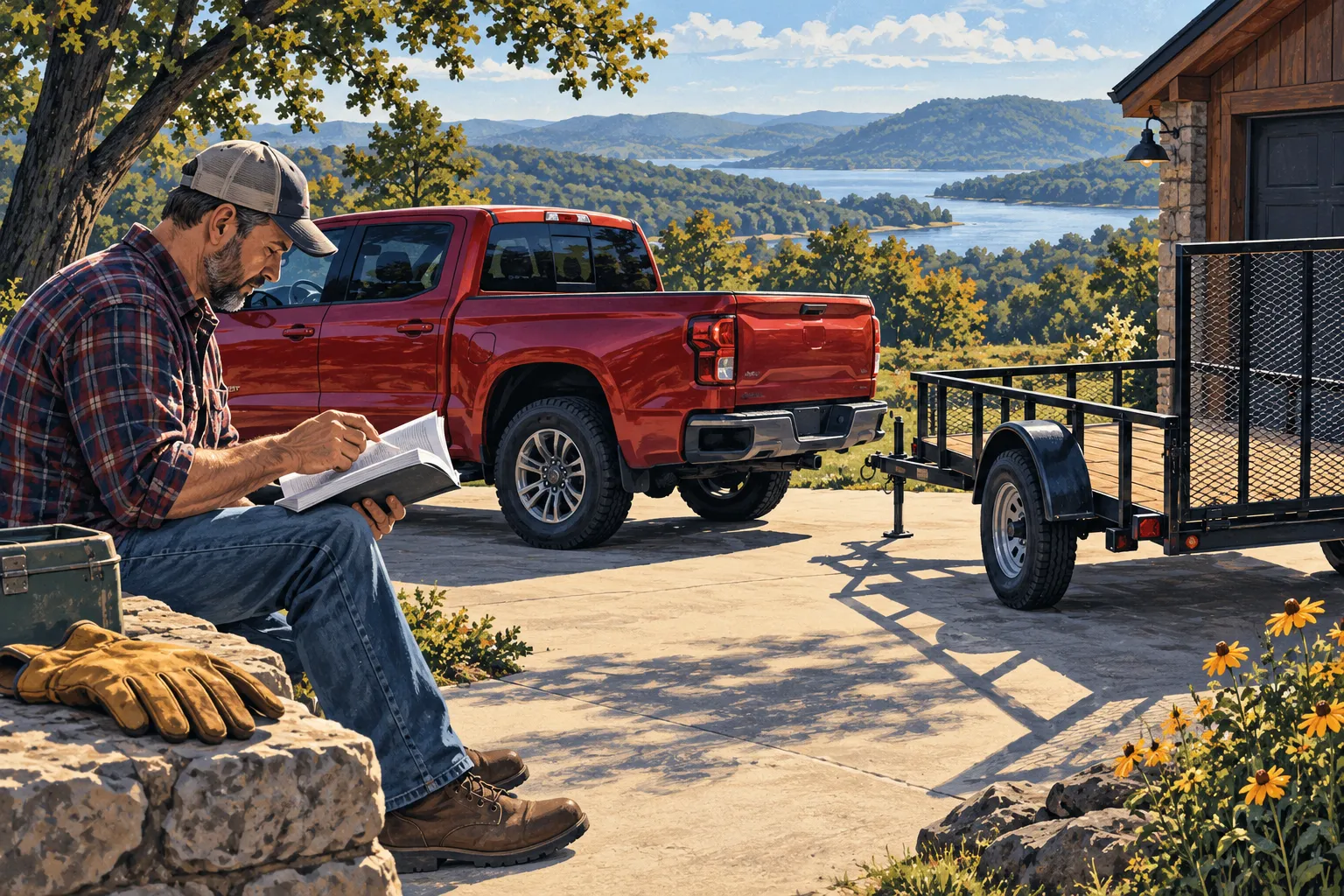
A pickup can be a practical tool for work, home projects, or time around the lakes. Before buying one for a specific job, define the job carefully. “It can tow a trailer” is not enough information to tell you whether a particular truck can handle your loaded trailer and everything else going with you.
Look at the exact vehicle's ratings and equipment. The highest number advertised for a model line may apply to a configuration different from the truck on the lot.
Separate towing from carrying
Towing capacity concerns the loaded trailer a properly equipped vehicle can tow. Payload concerns the load carried by the vehicle, including occupants and cargo. Trailer tongue weight also affects the load the truck carries. Ford's towing resources explain these distinctions and provide model-specific guidance.
That means passengers, tools, a toolbox, luggage, and trailer-related equipment cannot be treated as though they disappear when a trailer is attached. Several ratings and component limits may apply at the same time.
Do not use a general online number as permission to tow. Consult the owner's manual, vehicle labels, applicable towing guide, and qualified advice for the actual configuration and load.
Describe the full load
Write down what you expect to carry and tow on a normal trip. Include the people in the cab and the items that are easy to forget: fuel or water carried in equipment, supplies, a spare tire, a cooler, and installed accessories.
A trailer's empty weight is not the same as its ready-to-travel weight. If you already own the trailer, gather its documentation and determine the loaded weights through an appropriate weighing process. Guessing low can make an unsuitable truck appear sufficient.
If you have not chosen the trailer yet, avoid buying the truck on the assumption that every trailer in a broad category will be similar. Work from actual requirements before committing to the combination.
Verify the truck's configuration
Ask about the engine, drivetrain, cab, bed, axle information, and factory or added towing equipment. Review the appropriate manufacturer information rather than relying on appearance.
A hitch receiver is not proof that the truck has every component required for your intended trailer. Ask a qualified professional to evaluate the hitch, wiring, braking provisions, tires, and other relevant equipment against the actual use you plan.
The appearance of an accessory does not establish its rating, installation quality, or compatibility. Written specifications and inspection findings are more useful than “it looks heavy-duty.”
Inspect a used truck for its next job
Arrange an independent inspection and explain whether you plan to tow or haul regularly. Ask the mechanic to identify condition issues and maintenance needs relevant to that use.
Look at the truck as a daily vehicle as well. Test cab access, rear seating, visibility, and parking. Check that the bed length and loading height work for the items you carry. If tools need to stay dry or secure, include the cost and weight of any appropriate storage solution in your plan.
Build a complete towing plan
Before the first trip, confirm the loaded combination, applicable limits, equipment setup, and operating instructions with a qualified towing professional. Learn the manufacturer's procedures and allow for the skills and practice the combination requires.
A truck should be selected for a verified job, not asked to grow into a job after purchase. That is especially useful advice when a family trip includes both a trailer and a full cab.
If you are looking at Auto Credit's current inventory, tell us exactly what you need the truck to do. Call (870) 508-6080 to ask about available vehicle details so you can make the proper checks before choosing.
JOIN THE CONVERSATION
What did you think?
One reaction per browser. Select your reaction again to remove it.
Loading the conversation…
Comments