
Choosing a vehicle
Shopping for Third-Row Seating? Bring Your Real Family Routine
Check third-row access, child-restraint fit, passenger comfort, and cargo room with the seats in use before choosing your next family vehicle.
A third row can change the way a household gets around. It may make room for another child, a grandparent, or the friend who always needs a ride after practice. But a seating-capacity number does not tell you whether the arrangement will work comfortably every day.
Before choosing a three-row vehicle, test it with the people and equipment that make up your normal routine. The important question is not simply whether everyone fits. It is whether everyone can get in, buckle correctly, ride comfortably, and bring what the day requires.
Start with who sits where
Sketch a normal seating plan. Identify which passengers use child restraints, who needs extra assistance, and who will use the third row most often.
Then review the vehicle's manual and the instructions for each child restraint. NHTSA recommends choosing a restraint for the child's age and size, making sure it fits the vehicle, and following the installation instructions. Its car-seat guidance is a helpful resource before a family fit check.
Do not assume every seating position has the same anchoring arrangement or that an installation approved in one vehicle transfers unchanged to another. If you need help, look for a certified child passenger safety technician through NHTSA's inspection resources.
Try the route to the third row
Open the doors and operate the second-row access mechanism while the vehicle is parked. Follow the manufacturer's instructions, including any restrictions on moving a seat with a child restraint installed.
Ask the passenger who will sit in back to try entering and exiting. Check where their feet go, how much bending is required, and whether an adult can help when needed. A layout that works for an occasional trip may become frustrating during several daily stops.
If you are comparing a bench seat and captain's chairs, test the real arrangement instead of deciding from a photograph. Each can create different access and seating tradeoffs.
Check the space behind the occupied seats
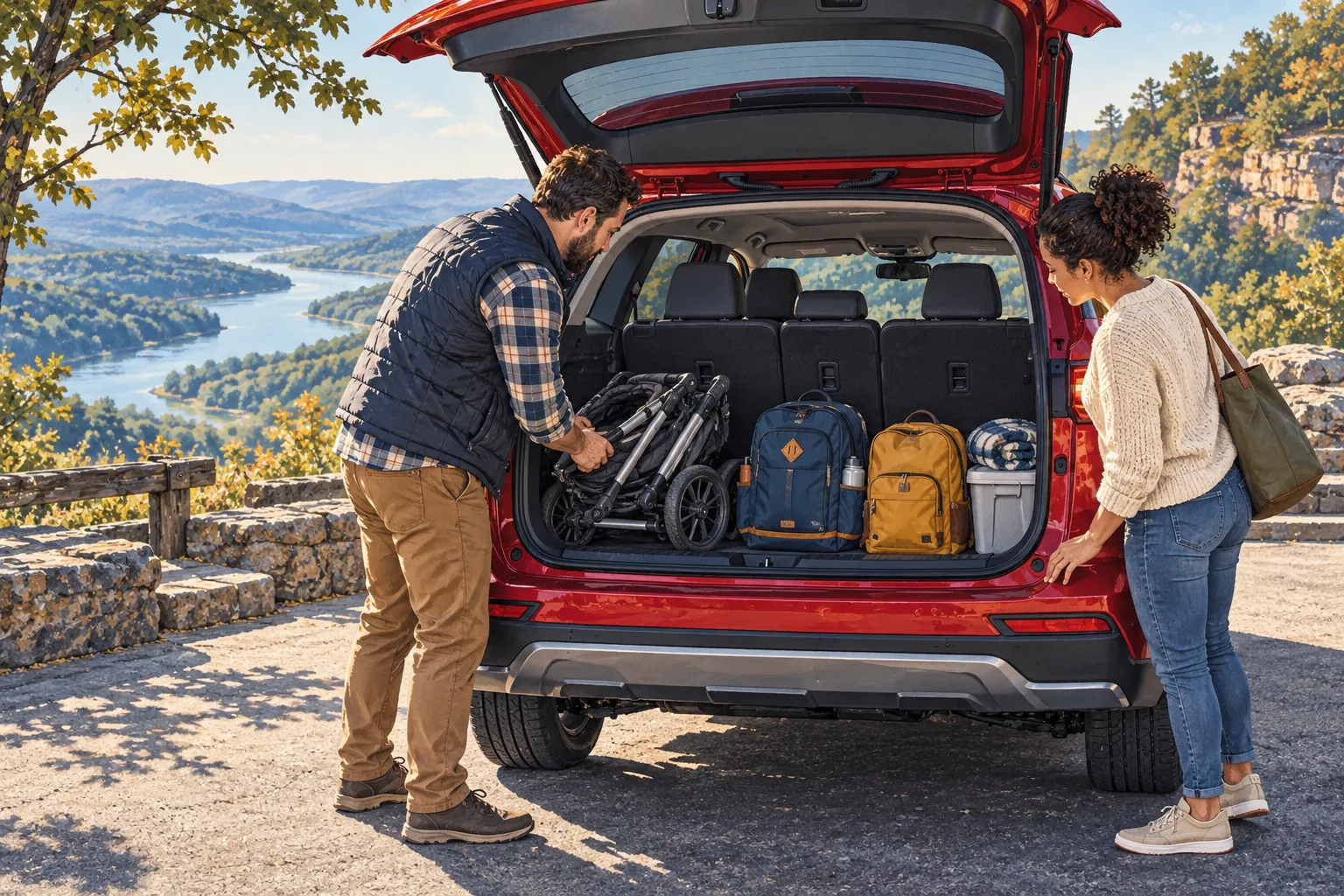
Leave the third row upright and load the items that usually travel with the family. A stroller, several backpacks, and groceries can tell you more about practical space than a maximum cargo figure measured with seats folded.
Check the hatch opening, the loading height, and where loose items can be secured. Do not plan to stack cargo in a way that blocks the driver's view or leaves heavy objects loose around passengers.
If one seat will often be folded, test that arrangement too. Make sure the remaining seating positions still work as intended and that the plan follows the vehicle's instructions.
Sit in every row
Check legroom with the front and second-row seats positioned for their usual occupants. Notice headroom, seat-belt access, available head restraints, and how easy it is to communicate with the driver.
Ask about rear climate controls and try them. Check whether the controls and storage areas make sense for your household. A quiet evaluation while parked is much easier than discovering the limitations with a tired family on a long drive.
Make the school-day test practical
Think through one ordinary afternoon: pickup, practice, a grocery stop, and the trip home. Where does each bag go? Can a passenger leave without everyone else climbing out? Can the driver load and unload without rushing?
That mental rehearsal often reveals what matters more than an extra screen or a large cupholder count.
Looking for more passenger room? See Auto Credit's currently listed vehicles and call (870) 508-6080 to confirm which have the seating layout you need. Bring your real routine—and, when practical, the equipment that goes with it.
JOIN THE CONVERSATION
What did you think?
One reaction per browser. Select your reaction again to remove it.
Loading the conversation…
Comments