
Ozark driving
Rain, Standing Water, and Flooded Roads: Make the Safer Call
Plan for heavy rain with current road information, alternative routes, and a clear decision to avoid floodwater and respect closed-road barriers.
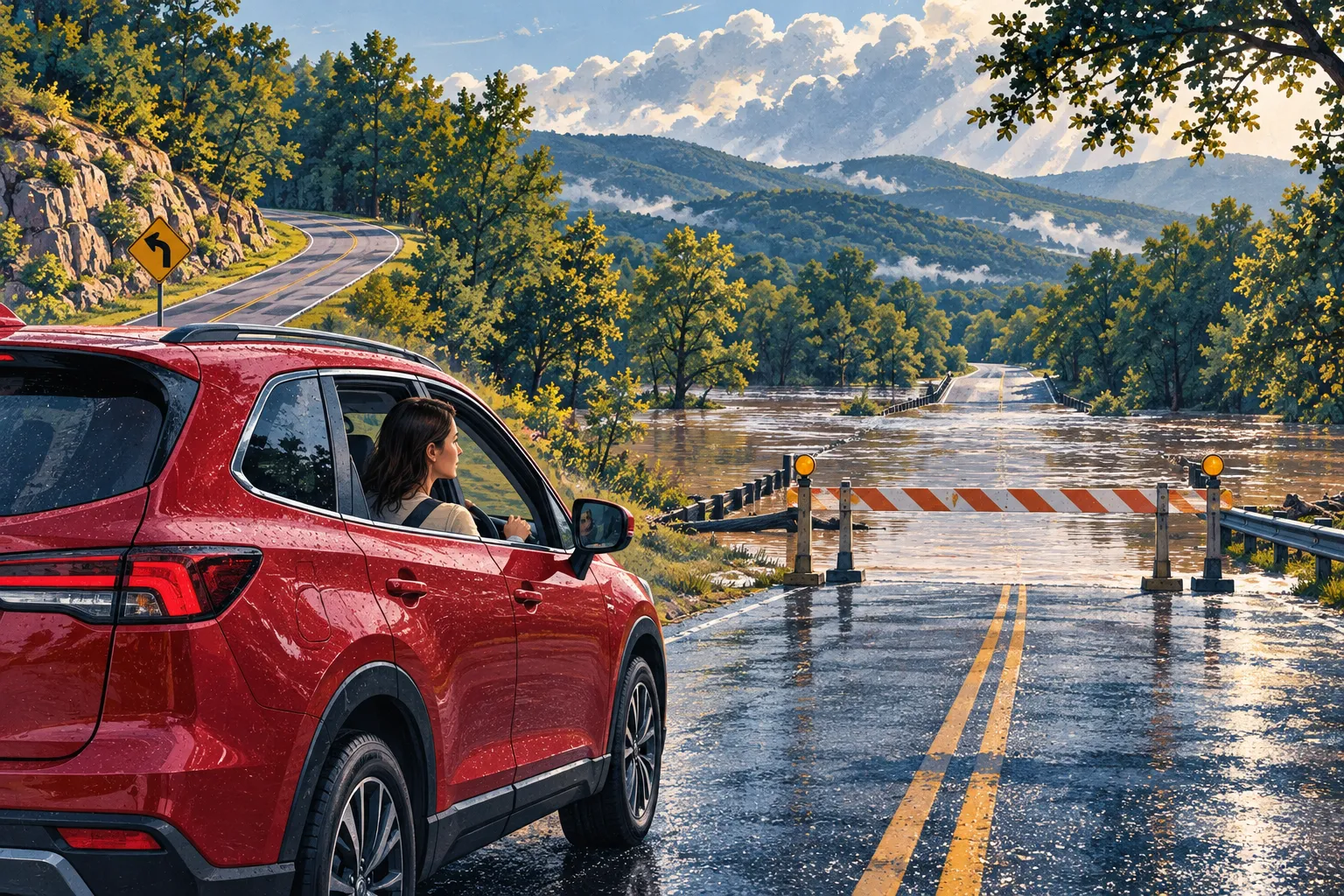
A route can feel predictable until heavy rain changes it. The road you used yesterday may have standing water today, and a navigation app may still suggest a crossing that should be avoided. In that moment, reaching the destination needs to become secondary to choosing a safe route.
The most useful flood-driving rule is also the clearest: do not drive into floodwater. If you encounter a flooded road, turn around when you can do so safely and choose another plan.
Do not try to judge a flooded crossing
Water can hide the condition of the road underneath, and its depth can be difficult to judge from a driver's seat. A larger vehicle does not make the crossing a sensible experiment. Never drive around a barricade to continue along a closed road.
The National Weather Service's Turn Around Don't Drown guidance explains why driving through floodwater can be deadly. You do not need to estimate an exact depth or watch someone else attempt it before deciding to stay out.
If turning around immediately would be unsafe, stop in a safe location away from the hazard and seek appropriate assistance. Follow local authorities' directions.
Make a second route before you need it
When heavy rain is forecast, review whether the trip is essential and identify an alternative that avoids known problem areas. Check current official weather alerts and road-closure information. Do not assume a saved map or a route used last month reflects today's conditions.
Tell the person expecting you that weather may change your arrival time. That small conversation can remove the pressure to continue because you are already late.
If there is no suitable route, postponing is a valid travel decision. A pickup, appointment, or errand can often be rearranged more easily than the consequences of entering a flooded road.
Give ordinary rain your attention, too
You do not need a closed road for rain to make driving harder. Reduce speed as conditions require, allow more following space, and keep your attention on the road. Use the vehicle's visibility equipment correctly and avoid travel when you cannot maintain adequate visibility or control.
NHTSA's severe-weather driving guidance offers additional preparation and travel advice. The appropriate speed may be below the posted limit when weather conditions demand it.
Put the phone away before moving. Have a passenger handle route changes when possible, or pull into a safe place to review them yourself. An unexpected detour is not a reason to divide your attention between a map and a wet road.
Prepare the vehicle on a dry day
Check the maintenance schedule and address tire, wiper, lighting, or defroster concerns before poor weather arrives. Ask a qualified shop about anything that seems unusual rather than waiting to see how it behaves during a storm.
Keep windows clean and learn the controls while safely parked. Make sure loose cargo will not interfere with your view or movement. A clear cabin and familiar controls reduce the number of tasks competing for attention when the weather changes.
If your vehicle has been exposed to floodwater, get professional guidance before operating it. Do not assume that a normal appearance means there is no damage.
Choose a stopping point in advance
For longer trips, identify places where you could safely pause, wait, or change plans. Share the general route with someone and let them know if it changes. Keep the phone charged and roadside contact information accessible.
A reliable driving plan includes the option to turn back. The destination will still matter after the storm, but the decision at a flooded crossing should be immediate: stay out of the water and find a safer way forward.
JOIN THE CONVERSATION
What did you think?
One reaction per browser. Select your reaction again to remove it.
Loading the conversation…
Comments