
Ozark driving
Getting Your Car Ready for an Ozark Cold Snap
Get ready for colder weather by addressing vehicle concerns, planning for visibility and delays, and deciding which household trips can wait.
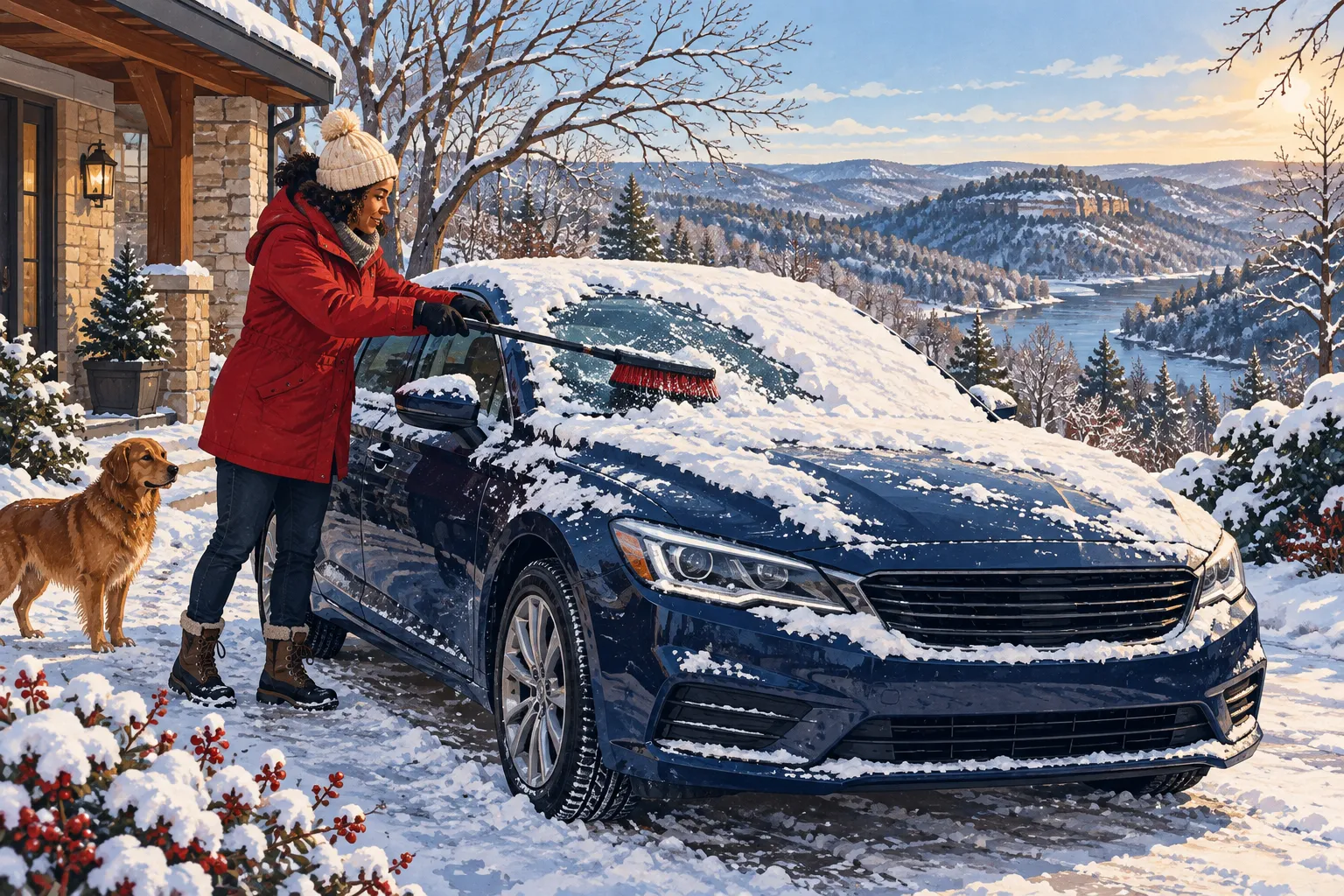
The hardest part of a cold snap is often the change in routine. A familiar morning now needs extra time to clear the vehicle, check conditions, and decide whether the trip should happen at all. Preparing before the forecast turns keeps those decisions from being made with one hand on the door and an appointment already running late.
For drivers around Mountain Home, winter readiness starts with the car but ends with a workable household plan.
Address weak spots before the temperature falls
Review the owner's manual and arrange attention for unresolved starting, heating, visibility, or tire concerns. Tell the shop what you have noticed and ask what should be checked for colder weather. A battery that has been slow to start the engine deserves a conversation before you depend on it during a cold morning.
NHTSA recommends checking the battery, tires, cooling system, and winter visibility equipment. The agency also advises keeping emergency supplies in the vehicle. Use its winter-driving checklist alongside the instructions for your exact car.
Book that work before the forecast creates a rush. Keep the invoice and any remaining recommendations together so you know what has been completed.
Make visibility a departure requirement
Allow enough time to clear snow and ice from the vehicle and establish a clear view before moving. Know how the front defroster and rear-window defogger work. Learn those controls while parked, not while approaching an intersection with a windshield that is fogging up.
Check that wipers and washer equipment are ready for the conditions, following the manual's recommendations. If visibility cannot be maintained, delay the trip or stop safely rather than continuing with a small clear patch in front of the driver.
Never run the engine in an enclosed garage. A morning routine should not create an exhaust hazard while you wait indoors.
Decide which trips can move
Write down the next day's essential travel and the trips that can be postponed. Discuss school, work, caregiving, and pickup arrangements before everyone assumes the usual schedule will hold.
Check current forecasts and official road information close to departure. Familiarity with a route does not tell you its current condition. Give yourself permission to change plans when conditions exceed your vehicle's capabilities or your comfort as a driver.
All-wheel drive or four-wheel drive does not remove the need for cautious decisions on slick roads. A vehicle's ability to get moving is not a promise that it can stop or turn as you expect.
Pack for an interruption
Keep warm layers, blankets, a flashlight, a charging option, water, and other supplies suited to your household. Store them securely and review them periodically. An emergency kit buried beneath everything you own is harder to use when you need it.
Have roadside-assistance contact information available, and know how you would describe your location. Tell someone your plan when traveling in challenging conditions and update them if it changes.
If the vehicle becomes disabled, prioritize a safe location and professional assistance. Follow emergency responders' guidance for your circumstances rather than treating a generic roadside tip as suitable for every road or weather condition.
Evaluate your regular winter needs
When shopping for a vehicle, think about the trips you actually make: early shifts, longer rural drives, family pickups, or occasional travel. Ask a mechanic to evaluate the condition and suitability of the tires and other important systems before purchase.
Try the climate controls and visibility features during the test drive. Make sure you can operate them comfortably. Comparing Auto Credit's available vehicles with those everyday needs in mind is more useful than choosing based on a winter-driving label alone. Preparation, maintenance, and the choice to postpone a trip remain part of the ownership plan.
JOIN THE CONVERSATION
What did you think?
One reaction per browser. Select your reaction again to remove it.
Loading the conversation…
Comments