
Ozark driving
Hot-Weather Car Care for Ozark Summers
Prepare for summer outings with a vehicle check, a practical loading plan, passenger care, and time to adjust when weather or travel plans change.
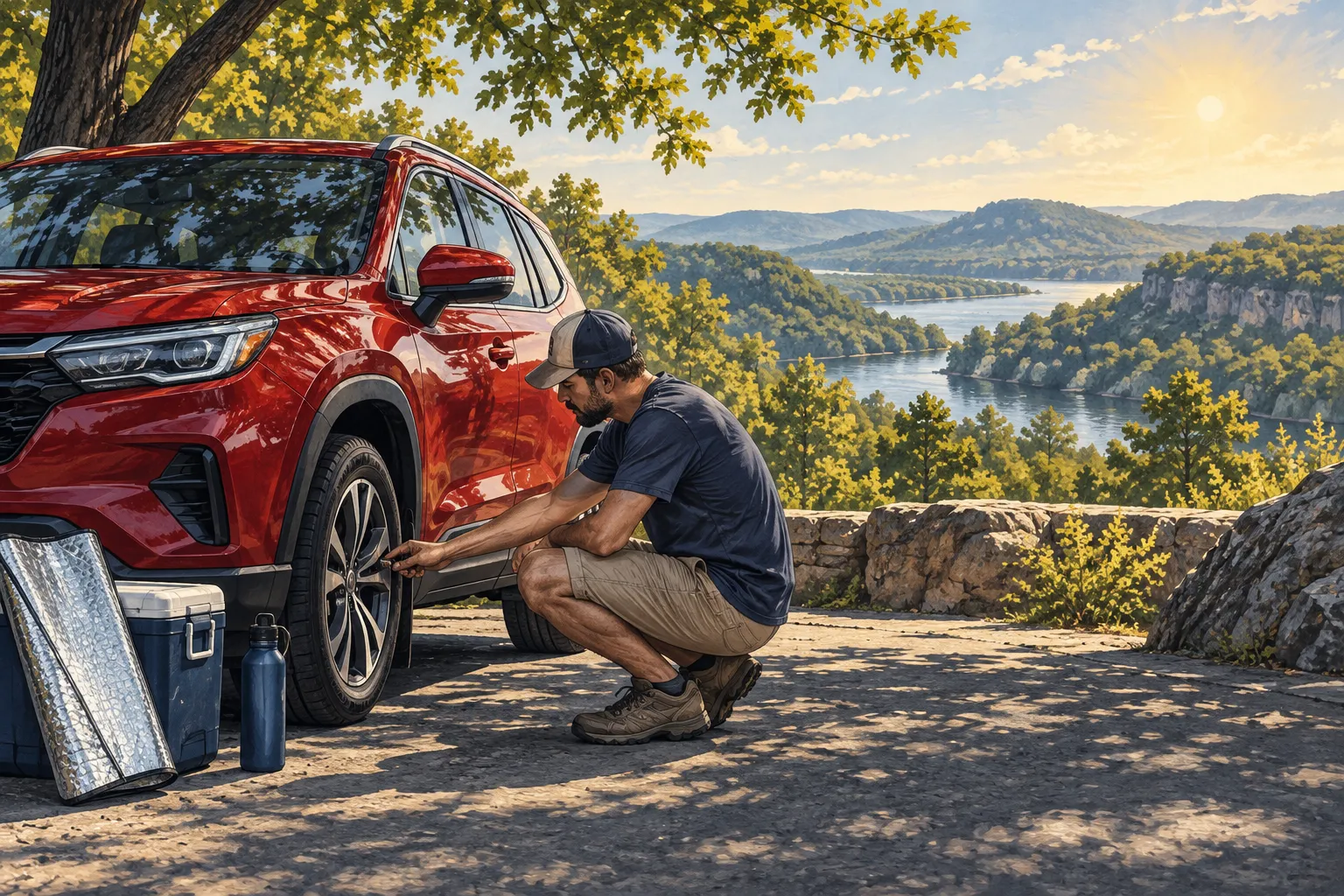
A summer outing can involve more than highway miles: a loaded cabin, long stretches between stops, a parking lot in full sun, and a return trip when everyone is tired. Preparing the car before departure gives you more useful options than discovering a concern beside the road.
For Mountain Home drivers, a good summer plan combines vehicle readiness with a realistic day. The car, the passengers, and the schedule all need some breathing room.
Book attention before the big trip
Review the maintenance schedule and address unresolved symptoms before leaving. Tell the shop about cooling concerns, fluid leaks, unusual noises, weak air conditioning, or starting problems. Ask whether the vehicle is ready for the mileage and load you expect.
Avoid describing a recurring problem as “probably nothing” because it has not yet interrupted a trip. A clear timeline helps the technician decide what to inspect.
NHTSA's summer guidance recommends checking items such as tires, the cooling system, lights, and wipers before travel. Its checklist can help you organize a conversation with a shop. NHTSA's summer driving tips provide the details.
Respect a hot cooling system
Learn the meaning of the temperature display and any overheating warnings in your owner's manual. If the vehicle indicates overheating or develops concerning symptoms, pull over safely and follow the manual's instructions. Arrange help when needed.
Do not remove a radiator or coolant-reservoir pressure cap while the system is hot. A roadside guess is not worth a burn. Let a qualified professional guide the diagnosis and repair.
Before travel, keep the roadside-assistance number and vehicle information somewhere you can reach without searching through luggage. If your phone is unavailable, a paper copy can save frustration.
Plan the cabin as carefully as the route
Pack drinking water and schedule stops that fit the people traveling. Keep essentials accessible without asking the driver to reach into the back seat. Secure loose items so they do not roll around the cabin, and use appropriate restraints for every occupant.
Never leave children unattended in a vehicle. A quick errand can become a delay, and a cooling plan should not depend on leaving someone in a parked car. NHTSA explains the danger of vehicle heatstroke in its child-safety guidance. Make the same responsible arrangement for pets: take them with you where allowed or leave them safely cared for elsewhere.
Make checking every seat part of the routine whenever the driver exits. Shared responsibility works best when one adult clearly confirms that everyone is out.
Load for the actual day
A cooler, folding chairs, bags, and extra passengers can fill a vehicle quickly. Follow the vehicle's load limits and keep the driver's view clear. Pack frequently needed items where they can be reached during a stop, rather than burying them under everything else.
Choose one or two priorities for the outing and allow time to change plans. A schedule that requires rushing home leaves little room for weather, traffic, or a tired passenger.
Check the forecast and destination information close to departure. A plan made earlier in the week may need to change when conditions do.
Use the season to evaluate your next vehicle
If you are shopping, try the cabin with the passengers and gear you actually carry. Check access to vents, rear-seat comfort, cargo space, and visibility while safely parked. Ask about any concerns during the test drive rather than assuming every convenience works.
When comparing vehicles in Auto Credit's inventory, picture an ordinary summer day as well as the occasional vacation. The best fit makes your regular trips easier while leaving room in the budget for maintenance and the activities you bought the vehicle to enjoy.
JOIN THE CONVERSATION
What did you think?
One reaction per browser. Select your reaction again to remove it.
Loading the conversation…
Comments