
Ownership
Build a Car Emergency Kit You'll Be Glad You Packed
Pack a manageable emergency kit for communication and waiting for help, then keep the supplies organized, secured, and ready for your household.
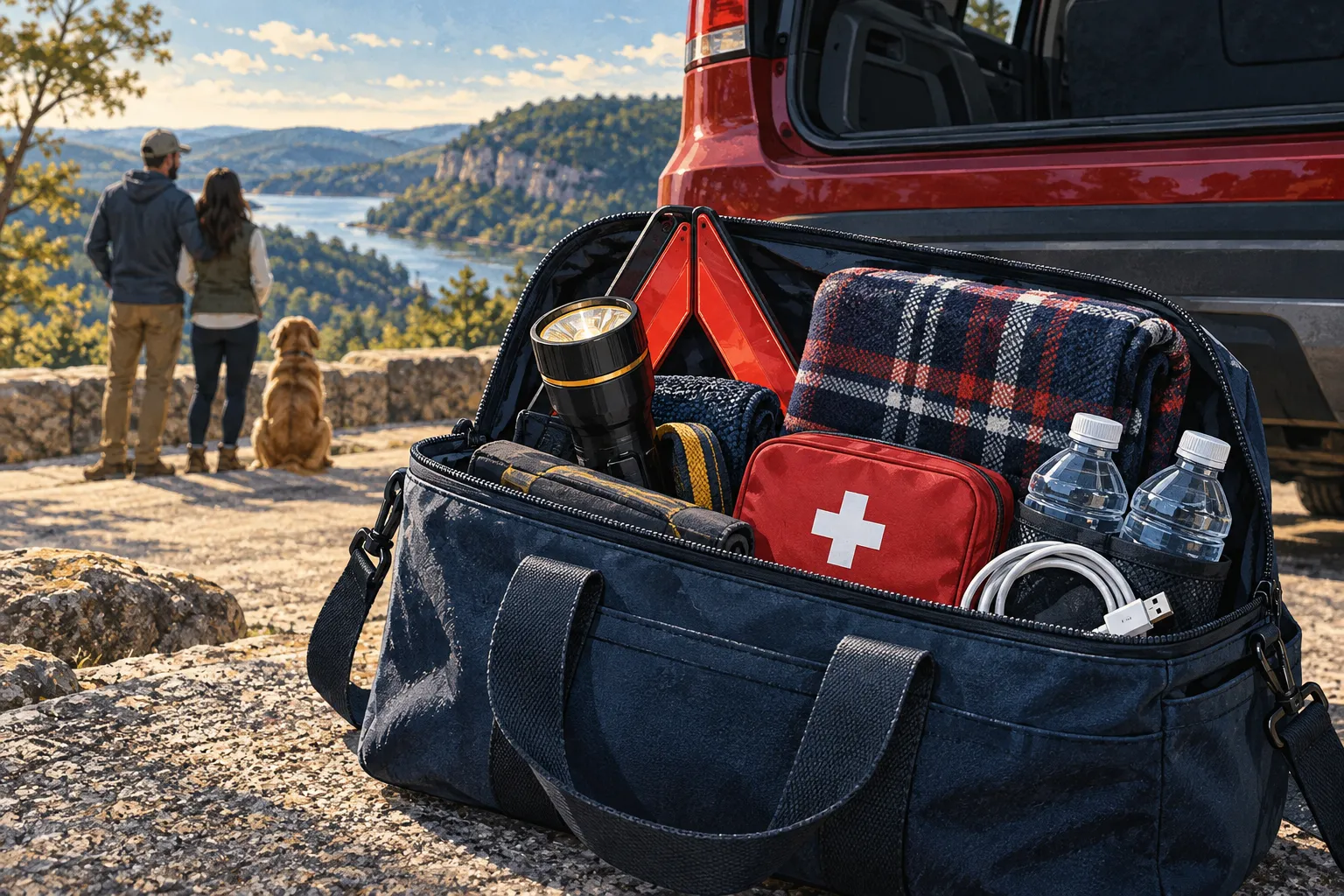
The best emergency kit is one you can find, understand, and maintain. An expensive bag of unfamiliar equipment may be less useful than a small set of practical supplies and the phone number for roadside help.
Build your kit around the interruptions you might face: waiting for assistance, a changed travel plan, a cold evening, or a phone that needs power. The kit supports good decisions; it does not make an unsafe roadside repair a good idea.
Start with communication and information
Save your roadside-assistance contact and understand what your plan covers, if you have one. Keep a paper copy of important numbers in case your phone is unavailable. Include basic vehicle information and a way to access the documents you may need without leaving sensitive paperwork scattered around the cabin.
Pack a suitable phone-charging cable and a charging option you maintain according to its manufacturer's instructions. A battery pack that has been forgotten for a year may not be ready when you need it.
Learn how to describe your location. Road names, direction of travel, nearby signs, and a safe-to-check map can help an assistance provider find you. Do not step into traffic to search for a landmark.
Add supplies for a wait
Useful starting items include a flashlight, spare batteries where appropriate, water, shelf-stable snacks, warm layers, a blanket, and a basic first-aid kit. Choose supplies for the number of people who usually travel with you and any specific household needs.
Ready.gov's emergency supply checklist offers a broader planning reference. NHTSA also includes vehicle emergency supplies in its winter-driving guidance. Adapt the list to your trips rather than treating it as a requirement to carry everything in a small car.
Store items securely. Heavy tools and loose containers should not be free to move around the passenger compartment.
Know what equipment requires training
Check what your vehicle actually carries for a tire problem: a spare, an inflator kit, another system, or no onboard solution. Read the manual so you understand its limits before you need it.
Owning a jack or jump-starting device does not mean every roadside situation is suitable for using it. Traffic, slope, weather, vehicle design, and your experience all affect that decision. If you cannot work safely or are unsure of the procedure, call a professional.
Do not crawl under a vehicle supported only by an emergency jack. Avoid improvising around damaged electrical components, hot fluids, or an unstable vehicle. A kit should make waiting for qualified help easier, too.
Make storage part of the plan
Choose a consistent location that is reachable during a stop. Label the bag plainly so another household member can find it. Put frequently needed items near the top and keep roadside contact information separate from tools.
Follow storage instructions for batteries, food, first-aid supplies, and other temperature-sensitive items. Vehicles can experience substantial heat and cold, so review supplies regularly rather than assuming they will last indefinitely.
Set a seasonal reminder to replace expired items, check charging equipment, and adjust clothing or blankets. After using something, replenish it before the next trip.
Decide what to do before a breakdown
Talk with other drivers in the household about the priority: reach a safe position if possible, assess the surroundings, and contact help. Where to wait depends on the specific road and hazard, so follow emergency or roadside responders' instructions. Call emergency services when there is an immediate danger.
The most valuable item in the car may be the plan you made in advance. When the unexpected happens, knowing whom to call and where the supplies are lets you focus on the situation instead of searching through the trunk.
JOIN THE CONVERSATION
What did you think?
One reaction per browser. Select your reaction again to remove it.
Loading the conversation…
Comments