
Maintenance
Brake Noises and Warning Signs You Shouldn't Ignore
Know what to tell a mechanic about a braking concern, what to ask after an inspection, and why changed stopping behavior needs prompt attention.
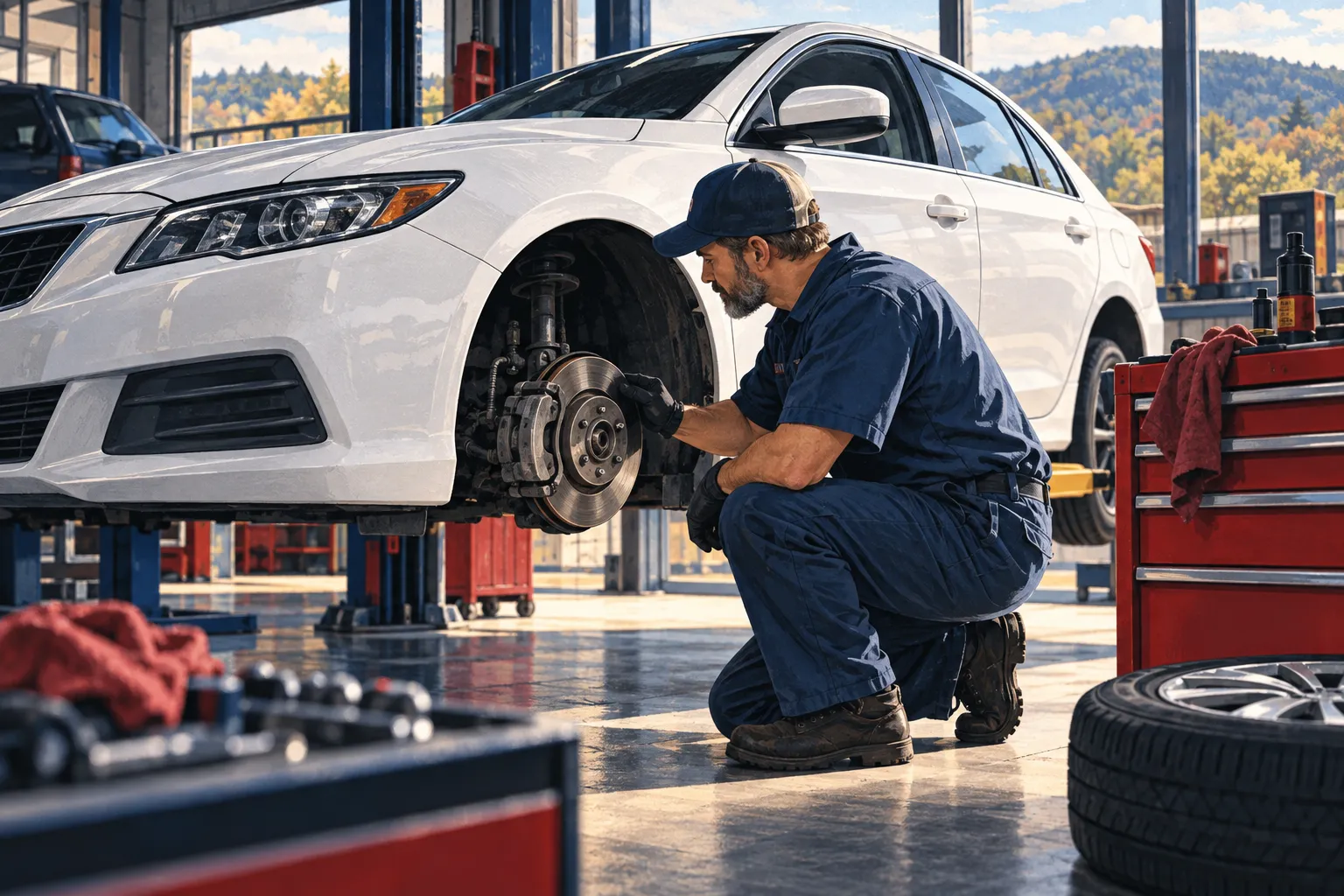
An unfamiliar brake noise creates an awkward question: is this something to schedule, or something that makes the next trip a bad idea? The answer depends on what the vehicle is doing, what its warnings say, and a professional inspection. The volume of a noise alone cannot establish whether the brakes are safe.
Take a change in braking seriously. A car that stops differently deserves attention even if there is no dramatic sound.
Start with control and warning messages
If stopping ability changes, the pedal feels abnormal, or a brake warning appears, follow the owner's manual and move to a safe place as conditions allow. Do not keep driving to see whether the problem improves. Arrange professional help, and use a tow when safe operation is in doubt.
Dashboard symbols differ between vehicles. Read the instructions for the exact warning rather than treating every light as a routine maintenance reminder. If you cannot identify the warning confidently, describe it to roadside assistance or a qualified mechanic from a safe location.
A planned appointment is useful only when the vehicle is safe to drive until then.
Describe what you notice
Once safely parked, write down when the concern occurs. Does a sound appear during braking? Is it new? Is there a vibration? Does the vehicle pull? Did the change begin after recent work?
Avoid deciding which part has failed before the inspection. Chevrolet notes that brake noises can have different causes and recommends inspection for concerns such as squealing, chirping, or grinding. A sound can identify a problem worth evaluating without identifying the repair itself. Chevrolet's brake-service guidance explains several warning signs.
Give the shop a concise description. “New grinding when slowing down, first noticed yesterday” is easier to act on than an online diagnosis copied from a different vehicle.
Ask what the inspection found
Request an explanation of the condition of the system and the work recommended. Useful questions include:
- What observation or measurement supports this recommendation?
- Is the vehicle safe to drive before the repair?
- What parts and labor are included in the estimate?
- Are there related concerns that need further diagnosis?
- What documentation or warranty comes with the repair?
Ask for the estimate in writing. If additional damage is found after work begins, establish how the shop will contact you before expanding the job.
Comparing estimates is reasonable, but first clarify whether moving the vehicle is safe. Do not turn a price comparison into extra driving with a known braking concern.
Be cautious with easy explanations
A friend may say their car made the same noise for months. That story cannot establish the condition of your brakes. Likewise, a quiet test drive after an intermittent symptom does not prove that the concern has resolved.
Brake work affects a safety-critical system. If you lack the training and equipment, use a qualified professional instead of improvising a repair from a short video. This is especially important when the concern involves changed stopping performance, fluid loss, or warning lights.
Keep the repair invoice with your vehicle records so future technicians can see what was done and when.
Bring the same attention to a used-car purchase
During a test drive, notice the vehicle's behavior under ordinary, safe driving conditions. Do not perform abrupt braking experiments on public roads. Mention any concern and arrange an independent inspection before making a purchase decision.
An inspection can also help you budget for upcoming wear items. Ask the mechanic to distinguish immediate concerns from future maintenance, then include those costs in your comparison. A vehicle's affordability is easier to judge when its purchase terms and likely ownership needs are both on the table.
JOIN THE CONVERSATION
What did you think?
One reaction per browser. Select your reaction again to remove it.
Loading the conversation…
Comments